
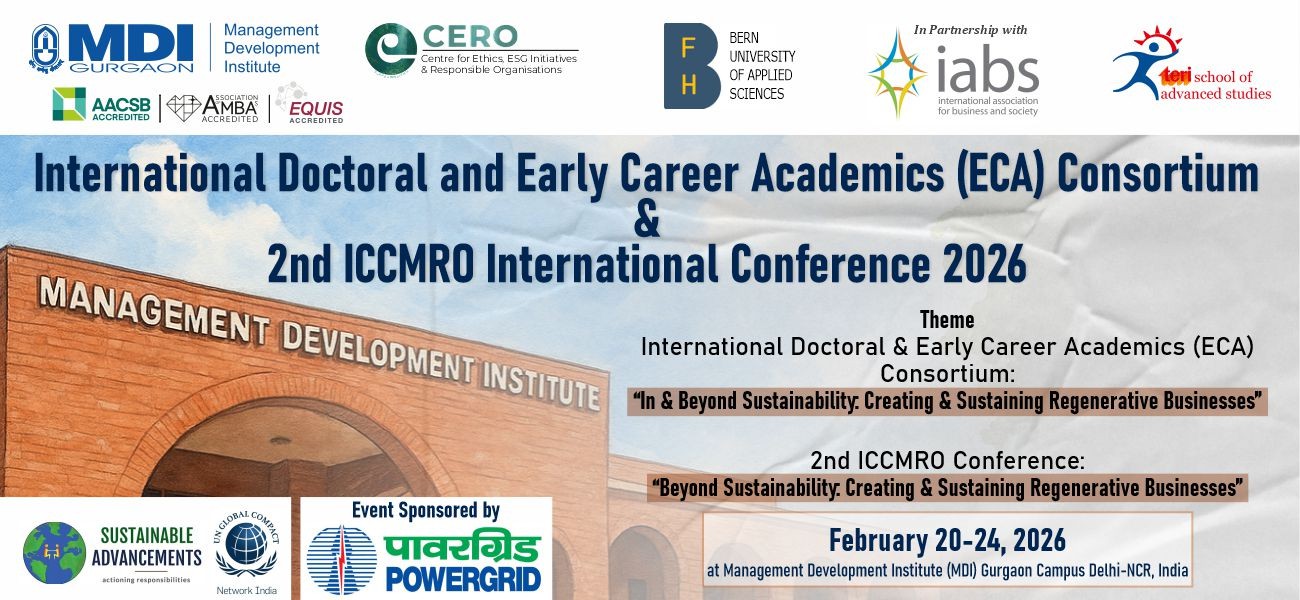
Centre for Ethics, ESG Initiatives & Responsible Organisations (CERO), MDI Gurgaon, in collaboration with the International Association for Business & Society (IABS), Business School, Bern University of Applied Sciences (BFH), Switzerland, and TERI School of Advanced Studies (TERI SAS), is delighted to announce the International Doctoral and Early Career Academics (ECA) Consortium 2026, along with the 2nd ICCMRO International Conference. The 2nd ICCMRO International Conference will additionally be supported by Sustainable Advancements, India, and UN Global Compact Network India(UNGC NI).
About MDI
The Management Development Institute (MDI) Gurgaon is a leading business school in India, established in 1973. Known for its rigorous academic programs and strong industry connections, MDI offers a range of management courses, including Post Graduate Programs, Executive Programs, and Doctoral Programs. The institute is committed to developing innovative leaders through a blend of theoretical knowledge and practical application.
About CERO
The Centre for Ethics, ESG Initiatives & Responsible Organisations (CERO), MDI Gurgaon, has been formed by a group of self-motivated professionals.The Centre aims to serve as a platform for education, research and engagement. The idea is to contribute to the foundations of social and economic changes for a sustainable and just world. This will lead to empowerment of the underprivileged and marginalised.
In and Beyond Sustainability: Creating and Sustaining Regenerative Businesses The consortium is designed to complement the International Conference on the theme, “Beyond Sustainability: Creating and Sustaining Regenerative Businesses” from February 22nd to 24th, 2026, by fosteringdoctoral and early-career research development, mentorship, and cross-disciplinary dialogue. It is positioned as alaunchpad for young scholarsto contribute to regenerative thinking in management and social sciences, blending rigorous research with societal impact.
Together, these two events create a continuum—from early research development to global knowledge exchange—reflecting the ICCMRO 2026 commitment to advancing Beyond Sustainability.
The Doctoral & Early Career Academics (ECA) Colloquium invites research ideas and proposals from doctoral scholars and ECA registered in various Management and Social Science disciplines at Universities and Institutions across Sustainability themes in the subdisciplines of Marketing, Accounting & Finance, Human Resources, Organisation Behaviour, Operations, Strategy & General Management, Business Communication, Economics & Public Policy and Information Management, Anthropology, Economics, Geography, History, Linguistics, Political Science, Psychology, Sociology, and Demography
Participants (Research Scholars / ECA) who would be interested in joining the international conference may do so at the same fees, with a request via email to: [email protected]
Beyond Sustainability: Creating and Sustaining Regenerative Businesses. This event will explore bold, future-focused business models that regenerate ecosystems, empower communities, and deliver lasting value for all stakeholders. This conference serves as a platform for scholars, practitioners, policymakers, and entrepreneurs to examine the next frontier of responsible enterprise. Regenerative business challenges traditional extractive paradigms, embracing circularity, inclusivity, and resilience. Drawing from diverse fields—ecological economics, systems thinking, organizational psychology, indigenous knowledge, and design innovation—this event fosters interdisciplinary dialogue on how businesses can actively contribute to the health of the planet and society.
By going beyond sustainability, we move from doing less harm to doing more good. Join us as we explore bold ideas, transformative research, and real-world practices that are reshaping the role of business in the 21st century. The conference invites submissions on the following themes:
Track 1: Indo-Swiss comparative perspectives, focusing on business and sustainability
Track 2: Rethinking Economies for Regeneration
Exploring alternative economic paradigms that recognize natural capital, circularity, and systemic resilience.
Track 3: Transdisciplinary Innovation for Sustainable Futures
Highlighting cross-disciplinary innovation for clean energy, circular design, and systemic problem-solving.
Track 4: Human Flourishing and Inner Sustainability
Focusing on inner development, values, and well-being as foundations for regenerative societies.
Track 5: Nature-Based, Indigenous Knowledge, and Biocultural Regeneration
Centering local and indigenous wisdom in biodiversity conservation and regenerative practices.
Track 6: Global South Perspectives on Regeneration
Examining regenerative transitions in emerging economies, highlighting South-South collaboration.
Track 7: Marketing for Regenerative Futures
Investigating how marketing can support regenerative economies through behavior change, branding, and measurement.
Conference Proceedings with ISSN/ISBN published by Macmillan Publishers.
Selected papers to be published in Springer’s edited book Series "Responsible Leadership and Sustainable Management".
The 6 best papers will be considered for publication in Springer Nature’s Journal of Sustainable Business (APC Waiver).
Business School, Bern University of Applied Sciences (BFH)
Bern University of Applied Sciences, BFH, Business School at Bern University of Applied Sciences (BFH Business School) is a public institution of higher education based in Bern, Switzerland. As part of the Bern University of Applied Sciences, it operates under Swiss public law and is committed to delivering practice-oriented, high-quality education, research, and consulting. BFH Business School offers bachelor's, master's, and continuing education programmes in business administration, international business, digital business management, and related fields. Its applied research and strong ties to industry and public institutions support innovation and knowledge transfer both regionally and internationally.
TERI SAS
TERI School of Advanced Studies is a not-for-profit, independent research institute recognized globally for its contribution to scientific and policy research in the realms of energy, environment and sustainable development in 1998. The objective of the TERI SAS is to build capacity around various themes of sustainable development, adopting an interdisciplinary approach and incorporating the most contemporary, research-based evidence into the curriculum.
Sustainable Advancements
Sustainable Advancements broadly aims to promote the 5Ps of the Sustainable Development Goals (SDGs).
United Nations Global Compact Network India (UN GCNI)
UN Global Compact Network India (UN GCNI), formed in November 2000, was registered in 2003 as a non-profit society to function as the Indian Country Network of the Global Compact, New York. It serves as a vital platform for advancing the ten universally endorsed principles within the Indian business landscape.

February 20, 2026 - February 24, 2026

09:00 am - 05:30 pm

Venue
MDI Gurgaon
Last date for the Extended Abstract Submission
Last date for Acceptance Intimation
Last date for Full Paper Submission
Last date for Early Bird Registration
Last date for Regular Registration
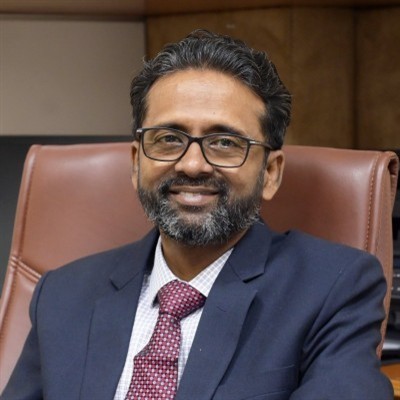
Director MDI Gurgaon

CERO Chairperson






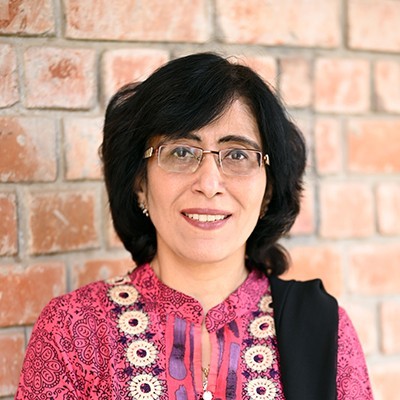


Climate enthusiast and Consultant- HR, Advisor CERO

CEO, WEforWater & Gurujal, a Sustainability consultant

Associate Professor, Coordinator, MBA Sustainability Management TERI School of Advanced Studies

Assistant Professor,Department of Policy and Management Studies TERI School of Advanced Studies

President-IABS

Professor, Z. Lupton Patten Endowed Chair of Business Ethics, University of Tennessee at Chattanooga
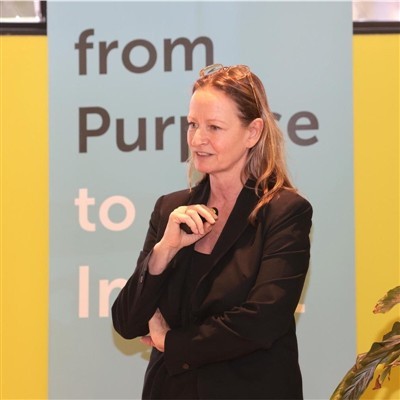
Professor of Accounting and Sustainability at the Open University

Director of the Business School of the Bern University of Applied Sciences (BFH)

Professor of Global Management and Head of the International Office at the (BFH)

Professor / Program Director CAS Board of Directors, ESG and Future Board (BFH)

Head of the Institute for Innovation & Strategic Entrepreneurship at the Business School of the Bern

Professor, Global & Intercultural Management; Co-Head Institute Marketing & Global Management at BFH
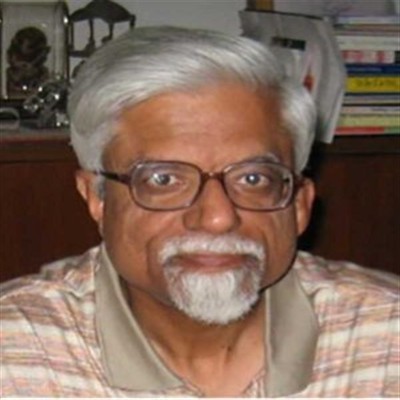
Advisor CERO

Distinguished Fellow at Centre for Equity Studies, Advisor CERO

Associate Professor, Corporate Sustainability, Copenhagen Business School; Advisor CERO
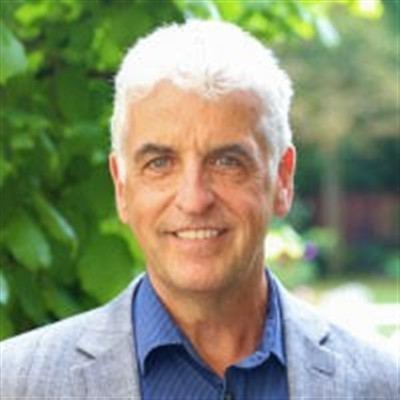
Co-founder and Doer at POGEBIX

Founder Director, Sustainable Advancements

Professor, Responsible Leadership, Zurich University of Applied Sciences (ZHAW), Winterthur, Switzer

Principal Academic Advisor, ISH; Visiting faculty, XLRI

Director, Centre for Workplace Excellence; Associate Professor, Adelaide University

Associate Professor in Finance at Kingston University, UK

Director, Digital Innovation and Sustainability Institute, NCCU.

University of Continuing Education Krems

Professor, UNC–Chapel Hill; Director, Modern Indian Studies Initiative
For any queries, please contact
Mail: [email protected]
Connect: 0124-4560359