
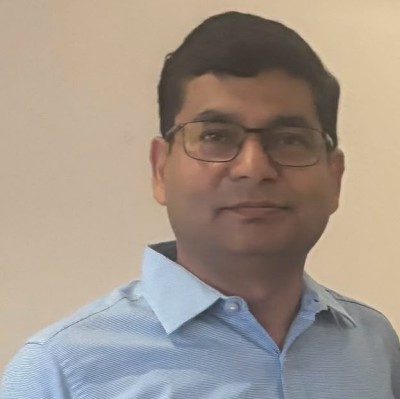
Arun Kumar Tripathy
Assistant Professor
+91-124-4560319
[email protected]
Profile
Dr. Arun Kumar Tripathy is a Fellow of the Indian Institute of Management Bangalore (IIM Bangalore), where he specialized in Corporate Strategy and Policy. He holds a B.Tech. in Marine Engineering from the Marine Engineering and Research Institute (MERI). He is currently a faculty in the area of Strategic Management at MDI Gurgaon. His research focuses on corporate governance and sustainability, with an emphasis on their strategic implications for organizations. His research work has been published in high-impact journals including ABDC A* and A category journals such as Human Relations, Information and Organization, Journal of Business Research, Organization and Journal of Environmental Management. He has co-edited two books on corporate governance, Navigating the New Era of Corporate Governance (Routledge) and Developments in Corporate Governance (Springer). He has also authored business cases with Ivey Publishing, one of which was nominated for the Outstanding Case Author award. In addition, he has presented his research at various national and international conferences.
He has also served as an Independent Director on the boards of several Indian companies, where he contributed to key board-level committees such as the Audit and Risk Management Committee and the Nomination and Remuneration Committee. He has also taught as visiting faculty at several Indian Institutes of Management. Before entering academia, he worked as a consultant, head of strategy, and marine engineer.
- Strategic Management (core courses)
- Corporate / Organizational Governance
Journal Publications
Bisht, N. S., Trusson, C., & Tripathy, A. K. (2026). Algorithmic identity regulation in the platform-based gig work of Indian food delivery workers. Human Relations. Advance online publication.
Bisht, N. S., Tripathy, A. K., & Siwale, J. (2026). Stalled gender diversity: How line managers’ boundary work (re)produces inequalities. Organization, 33(1), 56–76.
Bisht, N. S., Mohebshahedin, M., Tripathy, A. K., Mahajan, A., & Gupta, A. K. (2025). On the relevance of mandatory executive pay ratio disclosure: Evidence from India. Journal of Business Research, 196(C).
Shaikh, I., & Tripathy, A. K. (2025). Variability in sustainability reporting: A multicountry study. Journal of Environmental Management, 373, 123851.
Bisht, N. S., Noronha, E., & Tripathy, A. K. (2024). Digital technologies exacerbating mission drift in microfinance institutions: Evidence from India. Information and Organization.
Tripathy, A. K., Shaikh, I., & Bisht, N. S. (2024). Flag of convenience and the tragedy of the commons in maritime transportation. Marine Pollution Bulletin, 208, 117034.
Tripathy, A. K., & Bisht, N. S. (2021). ICICI Bank: Fighting a crisis in corporate governance. Asian Case Research Journal, 1–23.
Tripathy, A. K., & Jain, A. (2020). FinTech adoption: Strategy for customer retention. Strategic Direction, 36(12).
Edited Book
Shaikh, I., Tripathy, A. K., & Kaushal, L. A. (Eds.). (2026). Navigating the New Era of Corporate Governance: Insights into Reporting, Law and Insolvency. Taylor & Francis.
Kandpal, V., Tripathy, A. K., & Bisht, N. S. (Eds.). (2025). Developments in corporate governance: Emerging market perspective. Springer Singapore.
Book Chapter
Tripathy, A. K., & Bisht, N. S. (2026). BluSmart's Green Promises, Grey Realities: When ESG Narratives Meet Governance Gaps. In Navigating the New Era of Corporate Governance (pp. 297-301). Routledge.
Cases with Teaching Notes
Tripathy, A. K., & Bisht, N. S. (2025). Zomato: Pure Veg Strategy Under Fire. Ivey Publishing.
Tripathy, A. K., & Bisht, N. S. (2024). BharatPe: Governance Failure in a Start-Up. Ivey Publishing.
Maheshwari, I., & Tripathy, A. K. (2026). Perfora: Redefining customer experience in the Indian oral-care market. Ivey Publishing.
Dr. Tripathy has designed management development programmes and delivered executive training for public and private sector organizations.
Dr. Tripathy has undertaken consulting assignments primarily for public sector organizations.